

From "Kond" to "Golden Apricot:" Harutyun Khachatryan's Success Story
09.09.2026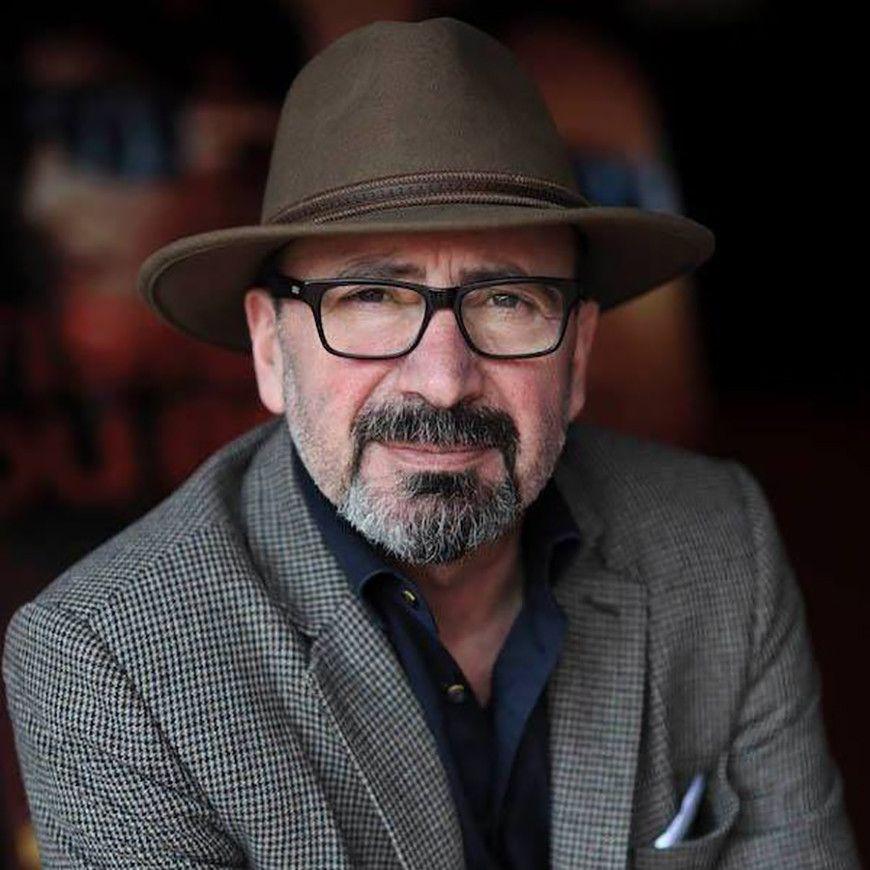
When speaking about him, the first things that come to mind are cinema, “Kond,” the “Golden Apricot” International Film Festival, other international film festivals, and the dozens of awards and honors he has received. But Harutyun Khachatryan’s story is not just a story of success. It is a story of long years of waiting, rejection, the struggle for creative freedom, a story of staying true to one’s own path, and, above all, understanding people and their inner worlds through cinema.
Harutyun Khachatryan, People’s Artist of the Republic of Armenia, President of the Union of Cinematographers of Armenia, member of the European Film Academy, founder of the “Golden Apricot” International Film Festival, recipient of numerous international awards and film director, is an alumnus of the Armenian State Pedagogical University (ASPU).
His interest in cinema began in childhood, although he is cautious about calling that feeling “love.” Cinema, in his opinion, was first and foremost, hard work.
Hrach, who rented a room in his family home in Akhalkalaki, worked as a film projectionist and screened films in the villages of Javakhk. Every Saturday and Sunday, young Harutyun would travel with Hrach through the mountain villages and help him with film screenings. This was how his first “film school” began.
He then worked on editing, read books on art, literature, and the history of cinema, and his interest gradually shifted from films to directors and the ways in which they perceived and interpreted the world of thought.
At the age of 16, he graduated from the Hovhannes Tumanyan School in Akhalkalaki and moved to Yerevan to become a director. But his first big disappointment awaited him in Yerevan: it turned out that the Theatre Institute had no directing department. The next seven years were years of waiting and rejection.
ASPU as a turning point
After Yerevan, his attempt to move to Moscow and be admitted to the Gerasimov Institute of Cinematography (VGIK) also failed. Then came military service, marriage, the birth of his son, and a job at the Electronic Computing Machine Design Institute (officially known as Yerevan Computer Research and Development Institute). Cinema, however, continued to live in his dreams.
This time, his wife’s advice to apply to the Pedagogical Institute once again turned out to be decisive. In 1977, he was admitted to the newly opened Department of Film Directing. Yuri Yerznekian was in charge of first-year students. Albert Yavuryan and Mikayel Stamboltsyan were lecturers in the same department. The competition was fierce and the requirements were strict and demanding.
But the young man, who had been told for years that he would never be admitted, not only became a student but also a recipient of the Lenin scholarship and graduated with the highest distinction.
He chose documentary filmmaking; feature filmmaking seemed too theatrical and, at times, artificial to him.
After graduating from the Pedagogical Institute, he joined “Hayfilm,” but things did not work out immediately here either: the opportunity to make a debut film sometimes required years of waiting.
After making several films, he directed “Kond.” The 12-member committee at “Hayfilm” described the film as weak, amateurish, uninteresting, anti-Soviet, and even anti-Armenian. The film, however, went beyond the scope of that assessment.
Together with the cinematographer, Harutyun Khachatryan took the film ‘out of the laboratory basement’ and presented it at the youth film festival held in Ukraine. In Kyiv, “Kond” received the grand prize. Then came Moscow, Tbilisi, Sverdlovsk, Munich, New York, and other international stages.
Years later, Harutyun Khachatryan, together with Mikayel Stamboltsyan and Susanna Harutyunyan, set out to establish an international film festival in Armenia.
“Cinema is an important means of telling about my inner state, my own story and the shortcomings I have observed, my ‘Armenianness’ (Armenian identity) and my anxieties - at the heart of which are Armenia, the Armenian people, the connection with the homeland, and the pain of leaving. I never became truly self-confident; I am always worried and afraid, wondering whether this or that film turned out well, whether people really needed it,” he says.
Perhaps it is precisely this doubt that represents one of the most human aspects of Harutyun Khachatryan’s long creative journey. Dozens of international awards, the highest titles, appearances at major film festivals around the world, decades of professional experience and yet, after making every film the same question comes to his mind: did people really need it?
Harutyun Khachatryan does not simply want to make films; he wants them to live on through time. “For me, it is very important that these films do not become outdated and that they withstand the test of time.”
And then he gives the most important assessment of his creative journey: with confidence, but not with complacency. He believes that his films will withstand the test of time because they tell stories about people and their emotions.